
The Affinity Model
A visionary mobile application framework conceived in 1999 — a decade before smartphones — that predicted proximity-based networking, mobile commerce, location services, and the entire app ecosystem that would become trillion-dollar industries.
Duration
3m
Team
1
Scale
Concept
Scope
Global
Overview
In October 1999, nine years before the iPhone App Store would launch and a full decade before smartphones became mainstream, this document was written. It laid out a comprehensive vision called the Affinity Model — a unified mobile platform that would use wireless technology and proximity detection to connect people, commerce, and experiences in ways that didn’t yet exist.
Every major concept in this document became a billion-dollar industry. The document itself is a time capsule of foresight.
What the Affinity Model Predicted
This 1999 document described, in detail, the following concepts — none of which existed at the time:
Proximity-based professional networking — being notified when someone with matching career interests is nearby at a conference. This became LinkedIn, and later features in every professional networking app.
Personal profile matching by proximity — creating a personal profile and being alerted when a compatible match is in the vicinity. This became Tinder, Bumble, and the entire location-based dating industry.
Friend and family location awareness — knowing when people you care about are nearby and instantly connecting. This became Find My Friends, AirDrop, and Snapchat’s Snap Map.
Proximity-based venue discovery — finding nearby restaurants, bars, and meeting places with reviews, menus, and reservations. This became Yelp, Google Maps, and OpenTable.
Mobile event management — conference registration, event scheduling, real-time alerts, and attendee networking. This became Eventbrite, conference apps, and the entire event-tech industry.
In-flight services — wireless entertainment selection, meal ordering, seat brokering, email, and shopping from your seat. This became modern in-flight entertainment systems and airline apps.
Mobile commerce and branded advertising — proximity-triggered offers, subscription models, and partnership revenue streams. This became the foundation of the mobile advertising economy.
Wireless travel organisation — flight booking, hotel reservations, car rentals, and restaurant reservations from a handheld device. This became Booking.com, Expedia, and every travel app.
Technology Landscape in 1999
To appreciate the foresight, consider what the world looked like when this was written:
The most popular mobile phone was the Nokia 3210 — it had no internet, no GPS, no camera, and a monochrome screen.
There was no WiFi standard (802.11b was just being ratified).
GPS was not available on consumer devices.
The Palm Pilot was the most advanced handheld device available.
Google was one year old. Amazon sold only books. Facebook wouldn’t exist for another five years.
The App Store wouldn’t launch for another nine years.
Comdex Conference — A Walkthrough
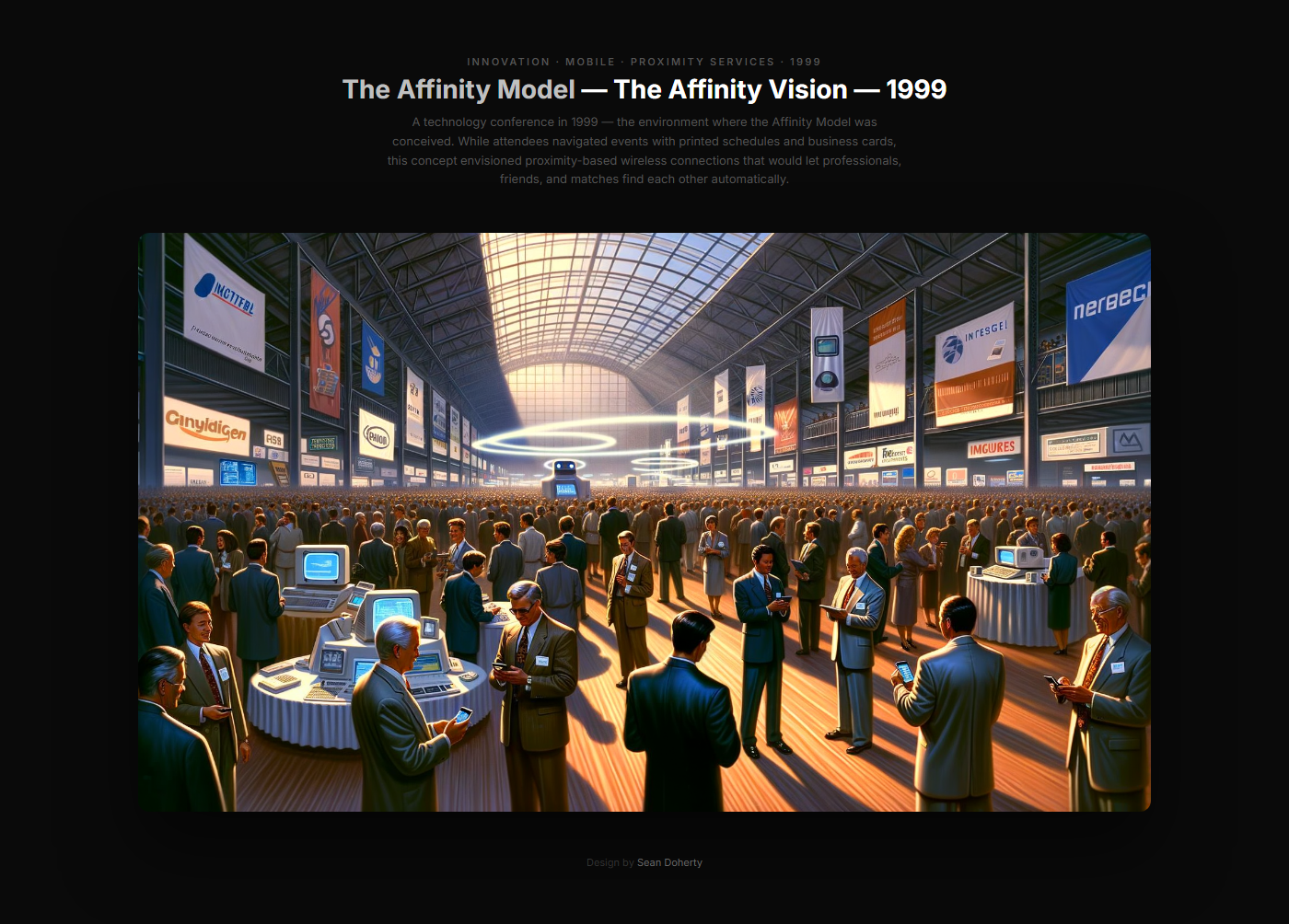
The document used a Comdex conference trip as a — walking through how a single user would use the Affinity platform to register for events, book travel, find professionals to network with, locate friends in the crowd, discover nearby restaurants, receive real-time event alerts, and even match with people who shared personal interests. Within minutes, the user had accomplished what would take hours of planning with 1999 technology.
The document concluded: "This is only the tip of the iceberg."
Why This Matters
This wasn’t a prediction made in hindsight. This was a fully structured product concept — with user flows, revenue models, partnership strategies, and a clear technology roadmap — written when the underlying technology didn’t yet exist to build it. The conviction wasn’t "this might happen someday." It was: "This is coming, and whoever builds it first wins."
Every concept in this document eventually became reality. Most became companies worth billions. The Affinity Model didn’t predict one trend — it predicted the entire mobile ecosystem.
Project Artifacts
Project Details
Industry
Innovation
Duration
3m
Team Size
1
Direct Reports
0
Scale
Concept
Scope
Global
Budget
Undisclosed
Platforms
Mobile Wireless Devices (Pre-Smartphone Era)
Regulatory
Standard
Engagement
Original Innovation — Concept & Strategy